SEO SEM Expert Consultant Lahore pakistan|Arif Anjum

SEO Tutorial For Beginners 2013

Image

Here are some free search engine optimisation tips for you to create a successful site. I deliberately steered clear of things that might be a bit grey, as what is grey today is often black hat tomorrow, as far as Google is concerned.

What is SEO?

There are a lot of definitions of SEO (spelled Search engine optimisation in the UK, or search engine optimization in the US) but lets face it, SEO in 2013 is about getting free traffic from Google, the most popular search engine in the world.

It’s about KEYWORDS and LINKS. It’s about RELEVANCE and REPUTATION. Search engine optimisation is about a web page being relevant enough for a query, and being trusted enough to rank for it. It’s about ranking for popular keywords for the long term,on merit. You can play by ‘white hat’ rules laid down by Google, or you can choose to ignore those and go ‘black hat’ – a ‘spammer’. But MOST SEO TACTICS still work, for some time, on some level, depending on who’s doing them, and how it’s deployed.

Whichever route you take, know that if Google catches you trying to “modify your rank”, then they will class you a spammer, and your site will be penalised (you wont rank for important keywords). Google does not want you to try and modify your rank. They would prefer you paid PPC to do that. The problem is – traffic from SEO is valuable. REALLY valuable. And FREE, once you’ve pleased Google enough.

In 2013, you need to be aware that what works to improve your rank can also get you penalised (faster, and a lot more noticeably). In particular, Google is currently waging war on unnatural links and manipulative tactics if it detects them.

Welcome to the tightrope that is SEO.

Lets touch on a few simple things to begin with:

To begin with….

  • If you are just starting out in seo, don’t think you can fool Google about everything all the time. Google has probably seen your tactics before. So, it’s best to keep it simple. GET RELEVANT. GET REPUTABLE. If you are just starting out – you may as well learn how to do it within Google’s Webmaster Guidelines first.
  • Don’t expect stellar results without a lot of work, and don’t expect them too fast. Expecting too much too fast might get you in trouble.
  • You don’t pay anything to get into Google, Yahoo or Bing natural, or free listings (SERPS). It’s common for the major search engines to find your website pretty easily by themselves within a few days. This is made so much easier if your website actually ‘pings’ search engines when you update content (via XML sitemaps for instance).
  • To stay in Google and other search engines, you you really should consider and largely abide by search engine rules and guidelines for inclusion. With experience, and a lot of observation, you can learn which rules can be bent, and which tactics are short term and perhaps, should be avoided.
  • Google ranks websites by the number and quality of incoming links to a site from other websites (amongst hundreds of other metrics). Generally speaking, a link from a page to another page is viewed in Google “eyes” as a vote for that page the link points to. The more votes a page gets, the more trusted a page can become, and the higher Google will rank it – in theory. Rankings are HUGELY affected by how much Google ultimately trusts the DOMAIN the page is on.
  • I’ve always thought if you are serious about ranking – do so with ORIGINAL COPY. It’s clear – search engines reward good content it hasn’t found before. It indexes it blisteringly fast, for a start. So – make sure each of your pages has content you have written specifically for that page – and you won’t need to jump through hoops to get it ranking.
  • If you have original quality content on a site, you also have a chance of generating inbound quality links (IBL). If your content is found on other websites, you will find it hard to get links, and it probably will not rank very well as Google favours diversity in it’s results. If you have decent original content on your site, you can let authority websites, those with online business authorityImageImage, know about it, and they might link to you – this is called a quality backlink.
  • Search engines need to understand a link is a link. Links can be designed to be ignored by search engines (the attribute nofollow effectively cancels out a link, for instance)
  • Search engines can also find your site by other web sites linking to it. You can also submit your site to search engines direct, but I haven’t submitted my site to a search engine in the last 10 years – you probably don’t need to do that.
  • Google spiders a link to your home page, finds your site, and crawls and indexes the home page of your site, and will come back to spider the rest of your website if all your pages are linked together (in almost any way).
  • Many think Google will not allow new websites to rank well for competitive terms until the web address “ages” and acquires “trust” in Google – I think this depends on the quality of the incoming links. Sometimes your site will rank high for a while then disappear for months. This is called the “honeymoon period”.
  • Google WILL classify your site when it crawls and indexes your site – and this classification can have a DRASTIC affect on your rankings – it’s important for Google to work out WHAT YOUR ULTIMATE INTENT IS – do you want to classified as an affiliate site made ‘just for Google’, a domain holding page, or a small business website with a real purpose? Ensure you don’t confuse Google by being explicit with all the signals you can – to show on your website you are a real business, and your INTENT is genuine. NOTE – If a page exists only to make money from Google’s free traffic – Google calls this spam.
  • To rank for specific keyword searches, you generally need to have the words on your page (not necessarily altogether, but it helps) – ultimately it is all dependent on the competition for the term you are targeting) or in links pointing to your page/site.
  • As a result of other quality sites linking to your site, the site now has a certain amount of Pagerank that is shared with all the internal pages that make up your website that will in future help determine where this page ranks.
  • Yes, you need to build links to your site to acquire  more Google Juice. Google is a links based search engine – it does not quite understand ‘good’ content – but it does understand ‘popular’ content.
  • When you have Google Juice or Heat, try and spread it throughout your site by ensuring all your pages are linked together
  • I think your external links to to other sites should probably be on your single pages, the pages receiving all your Google Juice once it’s been “soaked up” by the higher pages in your site (the home page, your category pages).It’s not JUST a numbers game, though. One link from a “trusted authority” site in Google could be all you need. Of course, the more “trusted” links you build, the more trust Google will have in your site. it’s pretty clear that you need MULTIPLE trusted links from MULTIPLE trusted websites to get the most from Google.
  • Try and get links within page text pointing to your site with keywords in it – not, for instance, in blogrolls or sitewide links. Try to ensure the links are not obviously “machine generated” ie site-wide links on forums or directories. Get links from pages, that in turn, have a lot of links to them.
  • Internally, consider linking to your other pages by linking to them within text – I usually only do this when it is relevant – and recently, I’ll link to relevant pages when the keyword is in the title elements of both pages. I don’t really go in for auto-generating links at all. Google has penalised sites for using particular auto link plugins, for instance.
  • Linking to a page with actual key-phrases in the link help a great deal in all search engines when you want to feature for specific key-terms. ieseo scotland” as opposed to http://www.hobo-web.co.uk or “click here“.
  • I think the anchor text links in internal navigation is still valuable – but keep it natural. Google needs links to find your pages. Don’t underestimate the value of a clever internal link keyword-rich architecture and be sure to understand for instance how many words Google counts in a link, but don’t overdo it.
  • Search engines like Google ‘spider’ or ‘crawl’ your entire site by following all the links on your site to new pages, much as a human would click on the links of your pages. Google will crawl and index your pages, and within a few days normally, begin to return your pages in search results (SERPS)
  • After a while, Google will know about your pages, and keep the ones it deems ‘useful’ – pages with original content, or pages with a lot of links to them . Ideally you will have unique pages, with unique page titles and unique page descriptions if you deem to use the latter – most search engines don’t use the meta description when actually ranking your page for specific keyword searches if not relevant –  I don’t worry about meta keywords these days.
  • Google chews over your site, analysing text content and links
  • If you have a lot of duplicate crap found on other websites Google knows about, Google will ignore your page. If your site has spammy signals. Google will penalise it.
  • You don’t need to keyword stuff your text and look dyslexic to beat the competition. Generally it’s good to have keywords in links, page titles and text content. There is no ideal amount of text – no magic keyword density. Keyword stuffing is a tricky business.
  • I prefer to make sure I have as many UNIQUE relevant words on the page.
  • If you link out to irrelevant sites, Google may ignore the page, too – but again, it depends on the site in question. Who you link to, or HOW you link to, REALLY DOES MATTER – I expect Google to use your linking practices as a potential means by which to classify your site. Affiliate sites for example don’t do well in Google these days without some good quality backlinks.
  • Many SEOs think who you actually link out to (and who links to you) helps determine a topical community of sites in any field, or a hub of authority. Quite simply, you want to be in that hub, at the centre if possible (however unlikely), but at least in it. I like to think of this one as a good thing to remember in the future as search engines get even better at determining topical relevancy of pages, but I have never really seen any granular ranking benefit (for the page in question) from linking out.
  • Original content is king and will attract a “natural link growth” – in Google’s opinion. Too many incoming links too fast might devalue your site, but again. I usually err on the safe side – I go for massive diversity in my links – to make them look more natural. Actually, I go for natural links in 2013 full stop. Google can devalue whole sites, individual pages, template generated links and individual links if Google deems them “unnecessary”.
  • Google knows who links to you, the “quality” of those links, and who you link to.
  • Google decides which pages on your site are important or most relevant. You can help Google by linking to your important pages.
  • It is of paramount importance you spread all that Google juice to your sales keyword / phrase rich sales pages, and as much remains to the rest of the site pages, so Google does not”demote” starved pages into it’s reserves, or “supplementals”.
  • Consider linking to important pages on your site from your home page, and via the template navigation on the site.
  • Focus on RELEVANCE first. Then get REPUTABLE. The key to ranking in Google is actually pretty simple.
  • Every few months Google changes it’s algorithm to punish sloppy optimisation or industrial manipulation. Google Panda and Google Penguin are two such updates, but the important thing is to understand Google changes it’s algorithms to control it’s listings pages. The art of SEO is to rank without tripping these algorithms – and that is tricky!

Keyword Research

The first step in any seo campaign is to do some keyword research. There are many tools on the web to help with basic keyword research (including the free Google Keyword Research Tool and SEMRUSH). You can use these tools to quickly identify opportunities to get more traffic:

Example Keyword Search Volume
seo tutorial for beginners 1900
seo tutorials 1600
seo tutorial pdf 1000
how to seo a website 880
seo tutorial step by step 720
how to seo your website 720
google seo tutorial 320
best seo tutorial for novices 260
free seo tutorial 210
free seo tutorials 210
on page seo tutorial 170
seo tutorials for beginners 170
all in one seo tutorial 170
seo tutorial video 140
how to seo website 140
seo tutorial in urdu 110
how to seo my website 110
seo tutorial download 91
joomla seo tutorial 91
online seo tutorial 91
seo tutorial in bangla 91
seo tutorial free 73
optimizare seo tutorial 73
best seo tutorial 58
basic seo tutorial 58
bing seo tutorial 58
step by step seo tutorial 46
beginners seo tutorial course 46
seo tutorial google 46
seo tutorial ppt 36
search engine optimization seo tutorial 36
seo tutorial w3schools 28
best seo tutorials 28
website seo tutorial 28
seo tutorial for beginners lesson 1 28
seo tutorial youtube 22
google seo tutorials 22
link building in seo tutorial 22
black hat seo tutorial 22
how to work seo tutorial 16
youtube seo tutorial 16
drupal seo tutorial 16
seo tutoriale 16
seo tutorial blog 16
seo tutorial 2011 12
seo tutorial online 12
seo tutorial printable 12
seo tutorial beginners 12
online seo tutorials

Getting a site to the top of Google eventually comes down to your text content on a page and external & internal link profile. All together, Google uses this analysis to determine whether your no1 in Google or number 32, or de-indexed. There’s no magic bullet.

At any one time, your site is under some sort of filters designed to keep spam sites out and deliver relevant results to human visitors. One filter may be kicking in keeping a page down in the serps, while another filter is pushing another page up. You might have poor content but excellent incoming links, or vice versa. Try and identify the reasons Google doesn’t link a particular page. Too few quality incoming links? Too many incoming links? No keyword rich text? Linking out to irrelevant sites? Too many ads? Affiliate links on every page of your site, found on a thousand other websites? Whatever, identify issues and fix them. Get on the wrong side of Google and your site might well be MANUALLY reviewed – so seo your site as if, one day, you will be geting that review.

The key to successful seo, I think, is persuading Google that your page is most relevant to any given search query. You do this by good unique keyword rich text content and getting “quality” links to that page. Next time your developing a page, consider what looks spammy to you is probably spammy to Google. Ask yourself which pages on your site are really necessary. Which links are necessary? Which pages are getting the “juice” or “heat“. Which pages would you ignore?

You can help a site along in any number of ways (including making sure your page titles and meta tags are unique) but be careful. Obvious evidence of ‘rank modifying’ is dangerous.

I prefer simple seo techniques, and ones that can be measured in some way. I don’t want to just rank for competitive terms, I want to understand the reason why I rank for these terms. At Hobo we try to build sites for humans AND search engines. Make a site relevant to both for success in organic listings and you might not ever need to get into the techy side of SEO like redirects and URL rewriting. Of course, to beat the competition in an industry where it’s difficult to attract quality links, you have to get more “technical” sometimes.

There are no hard and fast rules to long term seo success, other than developing quality websites with quality content and quality links pointing to it. You need to mix it up and learn from experience. Remember there are exceptions to nearly every rule, and you probably have little chance determining exactly why you rank in search engines. I’ve been doing it for over 10 years and everyday I’m trying to better understand Google, to learn more and learn from others’ experiences. It’s important not to obsess about the minute seo specifics unless you really have the time to do so!

Image

SEO SEM Expert Consultant Lahore pakistan|Arif Anjum

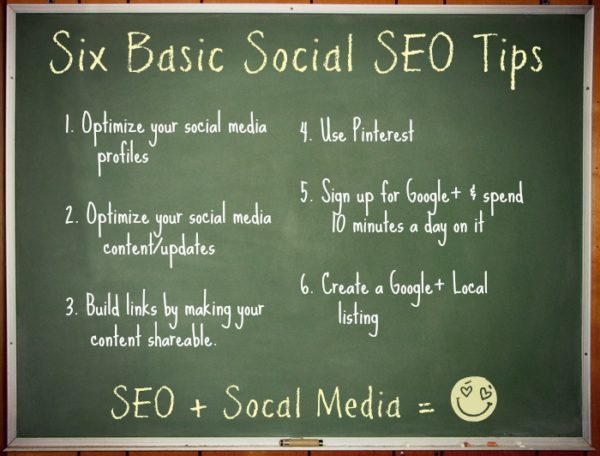
6 Uncomplicated Social SEO Tips for Small Businesses

BY Google SEO Expert Arif Anjum

Social-SEO-tips

Let’s start with what is SEO?

SEO stands for Search Engine Optimization. And the phrase improve your SEO strategyencompasses the actions taken to ensure your website can be found in a search engine’s results page (SERP) when searching for words or phrases relevant to the content on your website.

What does Social SEO mean?

Social SEO refers to the idea that social media links and interaction play a considerable part in a website’s search rankings. It sounds complicated (and, in reality it is) but basically SEO is all about optimizing content—whether it’s on your website or on a social media platform—in order to appear higher in search rankings.

Here are six uncomplicated Social SEO tips you can easily start implementing today:

1. Optimize your social media profiles

The key to an SEO friendly social media profile is to be descriptive as possible.  Always fill out the ‘About’ or ‘Information’ sections of any social media platform. Use words or phrases that describe your business and are also terms individuals would use to search for your business.

For example, to optimize your Facebook Page for local searches, it is very important to include your address, city, state, and zip. Always include links from your social channels back to your business’s website (and links from your website to your social channels).

Insider Tip: The “Category” field is often over looked on Facebook Pages but is important for Facebook mobile searches. Check to make sure your business is listed as the correct category while editing your basic information.

2. Optimize your social media content/updates

To optimize your social content, always include some of the relevant search keywords you determined for your business in your Facebook updates, tweets, pin descriptions, etc. It’s important to remember to share content from your website or blog socially to give it an SEO boost too. Sharing new content on Twitter is especially important because it helps Google index it faster (indexing means Google adds this URL to their database).

Insider Tip: Use your business’s name in your social posts. This helps Google associate the keywords you use to describe your business with your business’s name.

3. Build links by making your content shareable

A key factor in SEO is link building. Simply put, this means having good website to website relationships through links. When you have more quality sites linking to your website (inbound) and you are linking to other quality websites (outbound) the more authoritative Google determines your website to be. More authority equals a higher SERP rank.

Likes, comments, +1s, repins, retweets, etc., all play into the weight given to your links. If you create content people want to share, you can create more inbound links. “Content” doesn’t always have to be as elaborate as a blog post or whitepaper, content can also refer to tweets or Facebook posts as well. By posting engaging social content, you’re improving your SEO value. To review: Quality content equals more shares equals more links equals better SEO value.Simple right?

Insider Tip: A more advanced way to increase shares is to add social share buttons to individual pieces of content on your website or blog.

4. Use Pinterest

An easy way to create shareable content is by using Pinterest. Pinterest is great for link building and improving your keyword strategy. Google indexes pages from websites with heavy traffic faster and higher in a SERP. You can increase your content’s visibility in SERPs by adding keywords within the title of a Pinterest board, the board’s description, and you even have up to 500 characters to describe an individual pin so you’ll want to include keywords there as well.

Additionally, you can customize the pin’s link and point people back to your website or blog—further increasing the opportunity for your content to rank higher in a SERP. From an SEO perspective, Pinterest allows you to do a few things that other networks don’t, so take advantage of it.

Insider Tip: Google prefers high-resolution images, so use high-quality images on Pinterest whenever possible.

5. Sign up for Google+ and spend 10-minutes a day on it

No one loves Google+ more than Google. Sign up for a Google+ Business Page and complete as many fields as you can in the “About” section using keywords that describe your business. Google also allows you to add several customized links within your profile, you can use this as an opportunity to link back to your website, blog, and additional social channels. By spending 10-minutes a day sharing your content to your Google+ page, you’ll be more likely to appear within Google’s SERP. There are more reasons you should care about Google+ if you’re a Solution Provider.

6. Create a Google+ Local listing

According to Google, 97% of consumers search for local businesses online. In order to perform well in local search results it’s critical that you optimize your Google+ Local listing (formally known as Google Places). A Local Google+ page is different from a Google+ Business Page because it allows customers to easily connect with that business’s physical location. Update the details about your business—address, phone number, hours, etc.—and you’re good to go!

Insider Tip: Be sure to keep your information up-to-date on Google+ Local and Facebook—it helps!

Here are some common mistakes to avoid:

  • Not making your business’s social media sites public.
  • Creating a Facebook Profile instead of a Facebook Page (learn how to fix this here).
  • Not customizing your Facebook URL. (Here’s how)
  • Not using your business’s name as your Facebook Page name or Twitter name.
  • Uploading images to your social channels with file names such as: Photo1 or IMG1287—images with meaningful file names can help you rank better.
  • Duplicating another website’s content. Your time and resources are limited as a small business owner but Google doesn’t like this.
  • If something appears to be a fast and easy way to improve your SEO it’s probably a black hat tactic (that means it’s bad), Google frowns on these unethical techniques and penalizes those who implement them.

Keep this in mind regarding Social SEO

Improving your SEO takes time and SERP changes don’t happen overnight. Always be as descriptive as you can and keep your info up to date. Ultimately, as a small business owner you shouldn’t obsess over SEO. Instead, focus on providing a WOW! experience for your customers and your business will benefit through natural word-of-mouth.

SEO SEM Expert Consultant Lahore pakistan|Arif Anjum

ImageImageImageImageImageImageImageImageImage


EARN MONEY WITH SEO Certified SEO, Training Company in U.K,
Pakistan, Dubai, India and UAE-trainings
Training Pakistan Search Engine Optimization Training Classes Karachi,
Lahore ,Multan, Islamabad ,Sialkot , Chishtian, Bahawalpur, Haroonabad ,
Sahiwal,Multan,Hasilpur,Faisalabad
, Pakistan
(Urdu/Hindi/English) Google Adsense Optimization Training
Project Based AssignmentLive Project
Workü Certificateü
Free Course Material
SEO Training In Lahore | SEO Urdu Tutorial | Google Lahore by Arif Anjum
Search Engine Optimization Experts,
Get in Touch

Cell :+923124484957
Call : +923134991116
Skype : arif.sohail5
Facebook pag;http://www.facebook.com/pages/WST-ARIF-ANJUM/218692561609241;
Website:http://www.olxonline.com
Arif Anjum Firdous market Gulberg III Lahore, Pakistan


Google Certified Analytics Professional Arif anjum|pakistan | Advance SEO Training Course..

How to Optimize a Site For A Perfect On Page SEO And Keyword Targeting ?

If you are a Professional SEO or Successful Blogger then it’s obvious to get this same question asked around . However there isn’t any perfect structure but yes best practices for SEO Optimization are available . So today I will give you an idea about Keyword Targeting and Perfect On Page SEO Optimization .

Above Structure defined in the image is the best On Page SEO And Keyword Optimization idea . So now we will discuss role of every element in your Article and their SEO Weight .

HTML Head Tags

Title :- Its the best and most important factor of On Site SEO . Keyword you want to rank article for should be in the starting of title . Its best to have Keyword as First Word in Post Title .

Meta Description :- Meta Description is not a main factor because it is not used by Major Search Engines to determine ranking and position . However its vital element because mostly time your Meta Description will be shown in Search Engine Results and if you are having good meta description to attract readers then CTR would increase . Hence traffic will also increase .

Meta Keywords :- Yahoo is the search engine which gives preference to Meta Keywords And Tags but now Microsoft’s Bing have taken over Yahoo Engine so the only reason left to use Keywords is lost . So that we can say Meta Keywords doesn’t carry much weight now .

Canonical URL Tag :- Hope you know about the term ” Canonical URL ” , If not then see here <link> . If your Blog/Website is large then you must make use of canonical URLs . It would save your website against duplicate content and URLs .

Permalink / URL

If your content is King then don’t forget your article URL ( Permalink ) is Queen . Yes , URL structure carries impressive SEO Weight .On Page Seo

Length or URL :- Keep is as short as you can . Your URL must contain only important keyword . For example if your post title is ” CBSE Board 10th Class Exams Result 2013 ” then your permalink should contain only ” cbse-10th-class-result ” . Means you have to keep your permalink short . Search Engine Loves Short URLs .

Keyword Location :- So now question arises that Where should you place Keyword in URL for better rankings ? I would say your keyword must be closer to your domain . Means keyword should be present in starting of URL . So keep URL targeted and keyword close to domain .

Sub-domains And Pages :- Well , search engine gives preference to pages more then sub-domains . If you are using category based URL structure for your pages then its the best and you don’t need to use Sub-domains for ranking . For example , From following URLs search engine will give preference to 2nd URL . :-
Sub-domain :- gadgets.technoupdates.org/Samsung-galaxy-camera-review
Page without Sub-Domain :- technoupdates.org/gadgets/samsung-galaxy-camera-review

Word Separators :- Hyphens are still the king of keyword separators used in URLs . Its the traditional And Best Performing Way . However your main domain shouldn’t contain hyphens . technoupdates.org is far better than techno-updates.org .

Article Body Tags

Keywords Stuffing :- I would say it works ! . But that’s a Blackhat Technique or say negative SEO . You may see your rankings going high by inserting keywords like a hell in article. But believe me you won’t go much ahead. Once Search Engine caught you then there are very rare chances to get awesome days back . So just write your post for readers not for Search Engines .

Keyword Density :- Actually that’s the topic which can be seen in every ” SEO Related ” articles or tips by various bloggers . But that’s not the formula you can use to rank high . However its must and without it On Page SEO is incomplete .Keyword density should not be more then 2-3% .
My Suggestion :- Everyone keep saying that one shouldn’t do keyword stuffing. But In my opinion if you are writing long articles which have more then 700 words in it then you can do keyword stuffing something above then average . If you are writing 1000 Words article then your keyword density must be 5-6% . I have tried it and it worked well .

H1 Heading :- Heading tags are much important for On Page SEO and H1 has more weight then other heading tags like H2 to H6 . Proper use of heading tags is must . H1 tag must not appear more then 1 time on your article pages . Also you should bind your keywords in H1 heading line .

Other Heading Tags ( H2-H3-H4-H5-H6 ) :- These tags are having less importance then H1 Heading Tag . These tags are having very less SEO Weight or say zero .

Alt Attribute :- Alt attribute is having small SEO Weight . Its an important factor . So I recommend to use at least one Photo in your article with the main keyword as Alt Image Tag / Title . Now when Pinterest is being used by most of webmasters , its vital to have an Image in article to share it at Pinterest and to get a decent traffic from there .

Image File Name :- Your article image must contain keyword name . You can easily get some natural search traffic just because of article image .

Bold / Strong :- This tactic is also suggested by some SEO Experts that include your Keywords into Bold / Strong Tags . But research have proved that it doesn’t carry any SEO Importance ( Very Small ) .  So you can make 2-3 Small Keywords Bold in your article . Don’t exceed the limit and also don’t add Bold / Strong Tag to Long Tail Keywords as it will look spammy to readers .

Italic :- Surprisingly, italic text have more importance and carries much SEO Weight then Bold/Strong Text . So I suggest to use your targeted keywords inside Italic Text .

Interlinking :- Interlinking is suggested by nearly every blogger and most of them do it too . But it doesn’t have any connection with SEO . Yet its a must have component to use in article in order to decrease bounce rate of your website / blog and keeping visitors on your site for more time . It can be used to pass some Page Rank juice across the inner pages .

Keyword Location :- I strongly recommend to use your keywords within the first 30-60 words of article paragraph . Reason is simple , most of time I have seen that in Search Results Google doesn’t shows meta description , First 30-40 words of your article are used as Meta Description .

Conclusion

Never forget that On Page SEO is as important as Off Page SEO ( Making Backlinks,Social Sharing Etc. ) . It have its own importance and every blogger makes use of it . Major parts of On Page SEO are following :-

1. H1 Head line
2. Italic Text
3. Title
4. Permalink Structure
5. Keyword Location
6. Alt Image Tag

I Recommend using the SEOpressor Plugin For WordPress blogs. I am regularly using it for On Page SEO and rich snippet customization.

Now Its Your Turn

Blogging is all about learning and same with SEO . You never can’t be a master , you will get something new to learn everyday . And when daily search algorithms are changing, you can’t stuck with same SEO Tactics. So that’s all I know till now . I would like to know your views over it and also share some other elements of on site SEO that worked for you but I forgot to include .

Image

Image

Image

Advanced level SEO Training Program Advanced SEO Techniques| arif anjum|SEO Training Program

Image


Hi! I’m arif anjum, a highly skilled and experienced
Search Engine Optimization (SEO) expert and an Internet
Marketing, based in lahore Pakistan. I’ve been in this
industry for quite some time now and have helped various
small businesses and independent clients rank high on Google
, Yahoo and Bing with the use of ethical white-hat
SEO techniques that I have perfected over time through
real experience. I have also provided in-online SEO services
to marketers, webmasters and web developers.

government of pakistan se registerd

seo google adwords,google certified,php,Asp.net,FBML,WEB Analytics
+923134991116-+923124484957 arif anjum
ONLINE SEO TRAINING
SEO TRAINING WORKSHOP
GOOGLE ADWORDS TRAINING
GOOGLE CERTIFICATION
EARN MONEY WITH SEO
Certified SEO, Training Company in U.K, Pakistan, Dubai, India and UAE-training
seo
SEO Training Pakistan Search Engine Optimization
Training Classes Karachi, Lahore ,Multan, Islamabad ,Sialkot ,
Chishtian, Bahawalpur, Haroonabad ,Sahiwal,Multan,Hasilpur,Faisalabad ,
Pakistan (Urdu/Hindi/English) Google Adsense Optimization Training
roject Based Assignment
Live Project Work

ü Certificate

ü Free Course Material

SEO Training In Lahore | SEO Urdu Tutorial | Google Adsense Urdu Tutorial


SEO Services in Lahore-Cell :+923124484957
Call : +923134991116, Skype:arif.sohail5,www.olxonline.com,
SEO Expert Mr.ARIF ANJUM working since 2001s in IT Profession
Advanced level SEO Training Program Advanced SEO Techniques in Lahore|PAKISTAN


Advanced level SEO Training Program Advanced SEO Techniques| arif anjum|SEO Training Program

Pay Per Click (PPC)
 
If your page does not appear in the top 20 results of a search engine and do not get visitors through search engines then, you can pay for it. Many browsers have a column on the right side of search results where you can purchase a “sponsored link”, ie you can list their payment of a fee. This is what is known as Pay Per Click
Pay Per Click concept
 
If your page does not appear in the top 20 results of a search engine (which is pretty optimistic) likely will not get visitors through search engines, unless you pay for it. Many browsers, however, have a column on the right side of search results where you can purchase a “sponsored link”, ie you can list their payment of a fee. This is what is known as Pay Per Click (PPC) or Google Adword
 
Systems, pay-per-click or pay-per-views “are based advertising model where the advertiser pays for every royal visit to receive through the system. In a search engine PPC, advertisers bid to get the top positions in the keywords of interest. The highest bid, along with other criteria, does the ad to appear at the top of the list of results, which (supposedly) that the web will have a greater number of visitors, while increasing the cost per visit.
 
The major PPC systems currently operating in Spain are: Google Adwords, Espotting and Overture. All feed on “sponsored results” or “ad links” to the major search engines and web portals. Google, Overture and Espotting have programs to pay for visits that allow advertisers to select a set of keywords associated with a URL to direct visitors, custom titles and descriptions for each keyword, elements that appear in the results provided Google, Overture and Espotting as well as their respective networks of partners. No clutch, the order of advertisers in Google’s case no longer depends only on the commitment of our advertisers, but other factors such as click-through rate (“Click-Through Rate” – CTR) of the ad.
The fundamental advantage of the system of “Pay per click” is its ability to provide almost immediate visibility to advertisers on major search engines and portals. Its disadvantage lies in its, in many cases, high cost and should be complemented by campaigns positioning results, “free” and profitability measurement systems.
How does Pay Per Click?
 
First you pick the keywords that are important to your customers, those terms that people search in the search. Next, research how other advertisers are paying to appear on such lists of sponsored links. The higher you want to appear on the list of sponsors, the more you pay. The list begins with the best postor.Evidentemente, you want to find out how much you pay, for many customers and how much business will provide these visitors. You should be able to identify more than 100 search terms related by those who might want to bid on a single product or service.
Advantages
 
– PPC is the most effective method to get potential customers
– You have the ability to continuously monitor the cost per visitor
– It’s simple: the more you pay, the best positions will have on the list of “sponsored links”
– You only pay for visitors who click on your ad
– With PPC you can choose the terms to advertise your products and services
-Generate quality traffic to your website and visitors can read a description of your activity before you click on your ad
 
SEO Tools
 
All the time we are trying to find out exactly what projects are you working the competition and how to achieve excellence. Here are 13 tools that can help you understand why some competitors are better positioned than you.
 
You can use these services as a benchmark for the performance of your website.
All the time we are trying to find out exactly what projects are you working the competition and how to achieve excellence. Here are different seo tools that can help you understand why some competitors are better positioned than you.
 
You can use these services as a benchmark for the performance of your site compared to your competitors , analyze the in-links from sites similar to yours and consider well what are your goals before starting a campaign. The statistics include Alexa Traffic Rank, the domains of Age, WebRank Yahoo, Dmoz listings, the Feed Count, count of backlinks and some pages indexed in Search Engines like Google, Yahoo, MSN
 
 
Keywords Tools
 
    * WordTracker
    * AdWords Keyword
    * Traffic Estimator
 
Statistics and Analysis


Rankings
 
 
And diagnostic information
 
    * WebBug
    * Copyscape
    * WebPosition
 
Firefox Addons
 
    * SEO Quake
 ImageImageImage
 

Learn SEO And Earn Money Online|SEO Training Course|Adwords| Google Certification|seo expert Arif anjum

I will get you 20 supercharged dofollow SEO backlinks on aged Pr domains, 60 2nd tier backlinks and 3960 Pings, more details inside for $5

Gig PausedGig Paused

Contact Seller

  • backlinks7seo
    By backlinks7seo

    rated 73%
  • 9days

    EST. DELIVERY
  • 67%
    GIG RATING
  • 0in queue
    ORDERS
★★ 80 backlinks ★★ 3960 pings! We will create these 20 backlinks via supercharged BOOKMARKING to aged and authority domains (PR0 – PR3). All backlinks are DO-FOLLOW and on class A, B & C IPs. 5 days after creation of each bookmark, we will create 2nd TIER backlinks to each and every bookmark. Each bookmark created will be pinged to 33 PING services, also RSS feed for each bookmark will be created and pinged to 33 ping services – a total of 3960!
Image

SEO Training by Google Certified ARIF ANJUM

Image

Advanced level SEO Training Program Advanced SEO Techniques| arif anjum|SEO Training Program

What’s the Difference Between Onsite SEO and Offsite SEO?

What’s the Difference Between Onsite SEO and Offsite SEO?

Businesses and individuals are increasingly turning search engine optimization as a way to increase traffic to their website or blog. There are many different strategies that can help a website get more hits and a more favorable rating on search engines. A good SEO company Vancouver will employ both onsite and offsite SEO tactics simultaneously to help drive visitors to the site. Before hiring SEO companies Vancouver, businesses should know the difference between these two strategies so as to maximize their efficiency.

SEO Company  wst

The onsite SEO used by an SEO company Vancouver will involve editing the actual website or blog to increase search results. This includes a variety of tactics, all of which aim to give the site a more favorable position in search engines. Some of the most common techniques are:

-Using keyword rich text
-Using a variety of headings
-Indexing
-Using meta tags and rewriting them to make them more accurate and efficient
-Adding internal links to the page
-Writing and re-writing text in a variety of ways to maximize hits
-XML sitemaps
-URL’s
-Using URL’s that are dense with keywords, as well as keyword formatted URL’s

SEO companies Vancouver will know how to use these onsite SEO techniques to make the website more effective and optimize search engine results.

Offsite search engine optimization will be used by an SEO company Vancouver to support the blog externally. This technique will use other websites, such as social media, to drive people to the site. Some of these techniques are frowned upon by search engines, but most are completely acceptable and widely used. Some of the most common off site SEO techniques used by SEO companies Vancouver are:

-Back linking-involves using outside links to bring surfers to a page
-Paid linking
-Article directories
-Trackbacks
-RSS Feeds
-Press releases
-Inbound linking
-Comments on blog sites
-Marketing on social media

All of these SEO techniques involve bringing a person to the site from outside. Many SEO companies Vancouver are finding that social media is one of the most valuable resources when it comes to SEO. However, some people are turned off by these tactics, so they should only be used judiciously and ethically.

Anyone considering hiring an SEO company Vancouver should know the ins and outs of both onsite and offsite SEO. When done correctly these strategies are an invaluable way to generate traffic to a website. Using a combination of these techniques is the best way to get results.


Image

Arif anjum|pakistan | Advance SEO Training Course..

Image

Advanced level SEO Training Program Advanced SEO Techniques|Training in Lahore pakistan by arif anjum

On-site and Off-site SEO Explained


Before we jump into explaining on-site and off-site SEO, it’s important to understand exactly what we mean by the term “search engine optimisation” or SEO.

SEO is the process of improving a website or web page’s visibility in what’s called the ‘organic’ or ‘natural’ search engine results. It does not involve the use of paid ads like Google Adwords, which appear in the sponsors links of Google’s search results. SEO works by demonstrating to the search engines that a website or page is not only relevant, but an authority for particular keywords.

The goal of these SEO processes and techniques is to increase visitors to your business website by appearing on the first page of Google for targeted keywords. Some of these processes happen over time, such as adding new content, but it’s critical that others are implemented as early as possible.

Now, what’s the difference between on-site SEO and off-site SEO?

On-site SEO Explained

On-site SEO refers to everything you can do on your website to improve its SEO and therefore, its Google ranking. In order for a website or web page to be considered deserving of a higher search engine ranking, it has to tick a number of boxes, some of which are quite complicated for the inexperienced. They include Google friendly code and layouts, meta descriptions, title tags, SEF URLs and so on.

DIY On-site SEO

Where you can assist in your website’s on-site SEO is in the practice of adding new content, relevant to the targeted keywords, and adding internal links within the site itself. Keep your keywords in mind when writing website content for search engine ranking, but make sure it’s humanly readable with correct spelling and grammar. A great example is writing a blog post about a topic relevant to your product or service. This additional website content contributes to your ranking. Including a link to the product page improves your product pages authority on the subject. Please no ‘click here’ links! Use your keywords.

Depending on your technical experience, and content management system you can do more by including your keywords in meta descriptions, <h1-6> heading tags <ALT> image tags. If your website does not have a CMS, you need to talk to us urgently!

Off-site SEO Explained

Everything that happens on the Internet away from your business website that links back to your website affects off-site SEO. What you need here is effective back-links from other websites and blogs. Each link from an external website to your site passes an amount of “link juice” or “page rank”. As the amount of external references to your business website grows, more and more page rank is passed to your website, and in turn, you achieve higher Google rankings. Again the maximum results are achieved from links using your keywords in the anchor text.

DIY Offsite SEO

DIY Off-site SEO can be quite hit and miss. I say this because there are many factors which influence the value of a back-link. Essential DIY Off-site SEO is making sure you focus on one way back links, from pages with readable well written content. Reciprocal linking, or link exchanges, are the practice of linking to a site for a back-link to your site.  This is less effective than one way back-link, and could even be damaging if linking to “bad neigbourhoods“.

Get help with your Search Engine Optimisation

Of course, aside from the DIY SEO that you as a business website owner can perform, there are professional techniques offered with SEO packages to get you well ahead of the competition. If you’ve already started improving your Google ranking, or you’re not experienced with SEO techniques, you will see a massive improvement from the tools, experience and network of a high quality SEO business.


ImageImage


Get in Touch
Cell :+923124484957
Call : +923134991116
Skype : arif.sohail5
Arif Anjum Firdous market Gulberg III Lahore, Pakistan .

arif anjum seo exprt POWERFUL STEP-BY -STEP SEO TRAINING|LAHORE|PAKISTAN

 fact that everyone should be aware of is that Google owns 90% of the UK’s search, with YouTube (owned by Google) coming in second. This means you need to make your eCommerce site appeal to Google using SEO. Here are our 7 tips to help you do this for your business in 2013.

1. Interactive Site
For your customers to enjoy their experience on your eCommerce site, it needs to be interactive. Irrelevant from search results, you need to make sure you keep the same customers coming back and to do this, you must having interactive elements. This includes ratings and reviews, a live chat and video’s.

2. Minimal Load time
To keep users interested in your site, you need to reduce the load time as much as possible. If your website takes too long to load, you will find your users leaving before they even see your homepage.

3. Be careful with your Keywords
Something we always mention in our blogs is the use of keywords. Having too many keywords in your titles, description, content, meta tags and everywhere else on your site, you will see Google rank you negatively. This is because they will see your site built specifically for search engines and not users.

4. Multi-Channel
Most recent statistic from Forbes states that over 20% of people are shopping on mobile. Within three years, this number is likely to increase to 50%. A great place to start is to build your website responsive. Having the ability to offer your consumers the same experience on a mobile will help you with your SEO.

5. Social Media
A business will not be successful just because of Social Media. It needs to be a part of your marketing strategy. You should encourage interaction as much as possible through reviews, forums and photo sharing. Google picks up on this as a positive influence and will rank your eCommerce site higher in search because of it.

6. Content Marketing
Search engines hate commercial sites unless they own them. Google will rank your business based on the content you are sharing. Think about how shareable the content is as well as giving your customers something unique worth reading. Content is good for building reputation, long-term relationships with customers and increasing your eCommerce exposure.

7. Think of the User
Something which most businesses fail to do is give the consumers what THEY want. If you are constantly looking at the products you are offering just because you like them, you will find your traffic decrease and your SEO suffer because of it. If you don’t know what your customers want; find out by simply asking them.

Is your business ready for SEO success in 2013?

ImageImageImage